Raised Floor Systems
Raised floor systems are the preferred solution for spaces with extensive underfloor cabling and mechanical systems, delivering both functional efficiency and visual clarity. At our Düzce factory, chipboard-core and calcium sulphate-core panels and infrastructure systems are produced under the Onto and Preto brands.

Since 2004, Onto® has been manufactured using high-density chipboard and calcium sulphate core panels, offering high strength and long service life. With coated/bare and encapsulated panel options, it is compatible with surface finishes such as carpet tiles, LVT, HPL, PVC, and natural stone. It is confidently preferred in high-performance projects including data centers, offices, educational facilities, and commercial buildings.
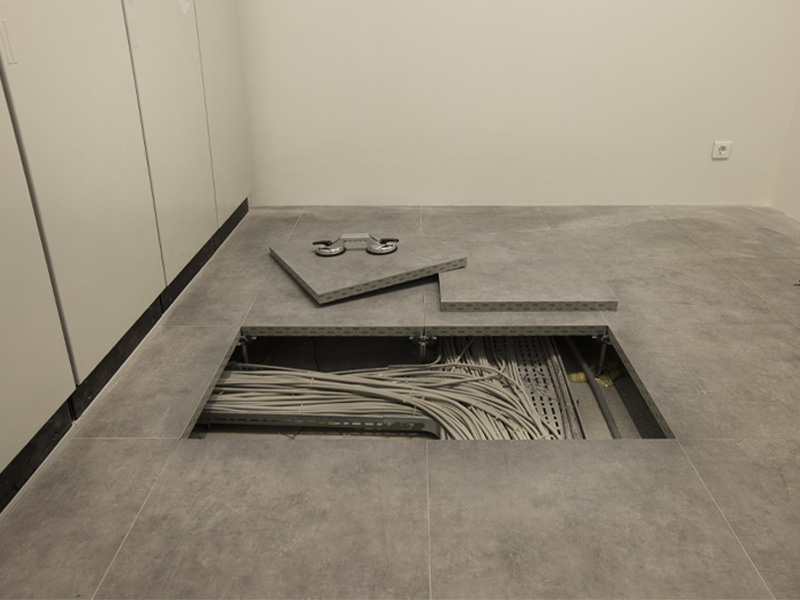

Preto offers optimized panel density with chipboard and calcium sulphate core panel options. With this structure, it delivers reliable performance that meets standard load requirements. Its compatibility with surface finishes such as carpet tiles, LVT, PVC, and HPL enables an organized infrastructure and a clean aesthetic for offices, meeting areas, and commercial projects.
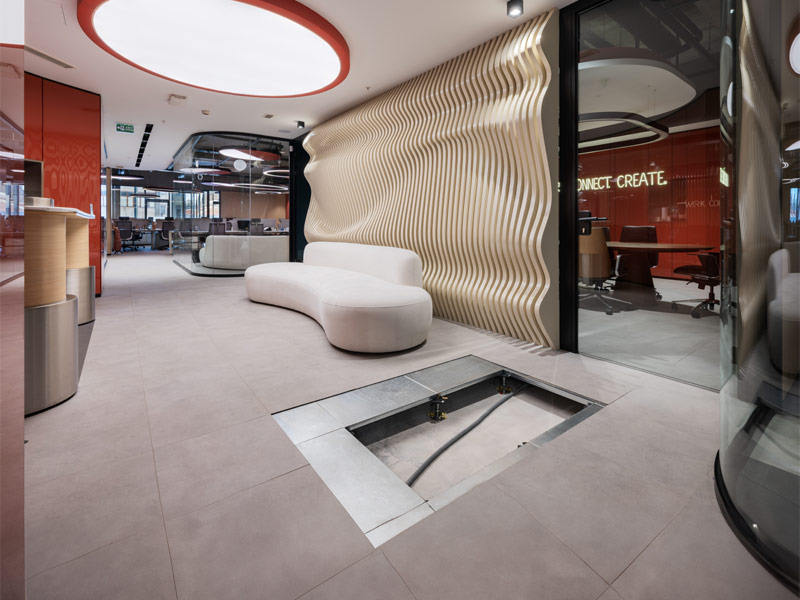
In modern architectural projects, effective management of technical infrastructure plays a key role in defining the functionality of space. Raised floor systems introduce flexibility to floor construction, enabling cabling, ventilation, and maintenance operations to be efficiently managed within a concealed void. Widely preferred in commercial buildings, data centers, and office projects, these systems offer clear advantages in both use and maintenance through their modular design. By uniting technical requirements with an aesthetic approach, these solutions bring long-term value to projects with Unigen quality.
What Is a Raised Floor?
A raised floor is essentially a secondary flooring system installed above an existing reinforced concrete slab. It is composed of modular panels supported by adjustable metal pedestals. The space created between the structural slab and the panels is known as the plenum, which can be used to house electrical cables, data networks, fire protection systems, or HVAC services.
Compared to traditional underfloor service installations, raised floor systems offer a highly modular solution. Panels can be easily removed in case of technical issues or layout changes, providing direct access to the infrastructure. This flexibility helps minimize renovation costs and reduce downtime throughout the building’s lifecycle.
Why Raised Floor Systems Are Preferred?
There are many technical and operational reasons to prefer these systems in your projects. While traditional flooring solutions offer a static structure, raised floor systems provide a dynamic and adaptable use of space. The main advantages of these systems can be summarized as follows:
● They allow unlimited and rapid access to building services and infrastructure.
● They easily adapt to changes in office layouts and space planning.
● They enable underfloor air distribution, contributing to energy efficiency.
● They eliminate cable clutter, enhancing workplace safety.
● Their acoustic performance helps reduce noise levels within office environments.
● Their load-bearing capacities ensure the safe support of heavy equipment.
These systems future-proof your building’s technological infrastructure. When transitioning to new technologies in the years ahead, new cables can be installed simply by lifting the panels—without the need to break or demolish the existing floor.
Applications of Raised Floor Systems
Raised floor systems are used in a wide range of enclosed spaces where intensive technical infrastructure is required. Beyond office environments, they are increasingly preferred in buildings with varied functional needs. Common application areas include:
● Modern Office Buildings: In open-plan offices, desk layouts frequently change. Raised floor systems make it easy to provide dedicated data and power access to each workstation.
● Data Centers and Server Rooms: In areas with dense cabling and high cooling demands, these solutions are essential for managing airflow through the underfloor space.
● Banks and Call Centers: In environments where uninterrupted data flow is critical, effective cable management ensures operational continuity.
● Educational and Healthcare Facilities: In laboratories, computer rooms, and hospital control areas, connections for technical equipment can be safely routed beneath the floor.
● Airports and Control Towers: In 24/7, high-traffic environments, durable flooring solutions play a vital role.
In addition, outdoor raised floor solutions have been developed for areas such as terraces and balconies. These specialized systems facilitate efficient water drainage while providing a level and aesthetically refined outdoor surface.
Types of Raised Floor Systems
Selecting the right panel is essential to ensure the long-term performance of your project and to meet technical requirements. Raised floor systems vary depending on panel structure and technical properties. Below, you can review the different types of raised floor panels in detail, categorized according to their application areas, load-bearing capacity, and technical needs.
Calcium Sulphate Core Raised Floor
Calcium sulphate core raised floors represent the highest segment in terms of fire resistance and load-bearing capacity. They offer excellent stability against humidity changes and maintain their dimensional integrity over time. These panels meet A1-level fire requirements. Their acoustic performance is also exceptionally high.
Chipboard Core Raised Floor
Chipboard core raised floors are manufactured from high-density chipboard. They are an ideal solution for office projects where load requirements are at a standard level and cost efficiency is a priority. Their lightweight structure allows for fast and efficient installation. The underside of the panels is typically finished with aluminum foil or galvanized steel to improve moisture resistance and load-bearing performance. Due to their budget-friendly nature and ease of use, they are widely preferred in commercial spaces.
Encapsulated Raised Floor
An encapsulated raised floor is a system in which all sides of the panel—top, bottom, and edges—are fully covered with 0.5 mm thick galvanized steel. This structure encloses the panel like a box, maximizing its mechanical strength. These panels are typically finished with carpet tiles or LVT coverings. The steel folds along the edges allow the panels to interlock more tightly with one another, creating a stable and vibration-free surface.
Raised Floor Dimensions
Industry-standard raised floor dimensions are typically based on 600 × 600 mm panel sizes. This standard format ensures ease of installation and full compatibility with the selected floor coverings. Panel thickness vary depending on the core material (chipboard or calcium sulphate) and load class, generally ranging from 28 mm to 38 mm.
Pedestal heights are determined according to the required underfloor void for each project. This flexibility makes it possible to develop solutions suitable for varying levels of service and installation density.
Installation of Raised Floor
The installation process requires technical precision and should be carried out by specialized teams. The installation consist of the following steps:
- Subfloor Preparation: The concrete slab is cleaned of dust and debris. Anti-dusting products such as epoxy primers are applied to protect and stabilize the surface.
- Laser Levelling: The highest and lowest points of the space are identified using laser equipment, and the reference level is marked.
- Pedestal Installation: Load-bearing pedestals are fixed to the floor using special adhesives, according to the defined grid layout.
- Panel Installation: Panels are placed onto the pedestal heads, fitting into the gaskets or sockets. At this stage, installation accuracy is critical; panels must sit perfectly at the corners, and level differences must be avoided.
- Accessory Installation: Cable outlet boxes and air grilles are installed where required, completing the system.
Once the system installation is complete, aesthetic floor coverings can be applied. In modern office environments, durable and visually refined surfaces such as LVT can be selected to enhance the overall design.
Factors That Determine Raised Floor Pricing
Referring to a single, fixed price list can be misleading, as raised floor pricing depends on various technical and project-specific factors. Key elements affecting cost include the panel core material (chipboard or calcium sulphate), the factory-applied surface finish (such as PVC, HPL, or ceramic), and the height of the supporting pedestals.
The total floor area, logistics conditions, and the complexity of installation also influence the overall budget. At Unigen, we carry out load analysis based on project requirements and aim to provide the most efficient system at the most appropriate cost. For a detailed evaluation, you may contact our technical team.
Frequently Asked Questions About Raised Floor Systems
What are the main advantages of raised floor systems?
These systems provide immediate access to underfloor cabling and service installations. They support flexible space planning while significantly reducing maintenance and repair costs. In addition, they offer excellent acoustic and thermal insulation performance.
What are the differences between calcium sulphate core and chipboard core raised floors?
Calcium sulphate panels offer significantly higher fire resistance and load-bearing capacity and are typically used in data centers and high-end projects. Chipboard core panels, on the other hand, are lighter, quicker to install, and more cost-effective, making them suitable for standard office environments.
Can raised floor systems be used in outdoor areas?
Yes, however, systems designed for outdoor use differ from indoor solutions. Outdoor applications require panels finished with ceramic or natural stone surfaces and corrosion-resistant pedestal systems. These solutions allow water to be drained through the void beneath the floor.
Are raised floor dimensions standard?
Globally and in Türkiye, the most used standard panel size is 600 × 600 mm. This standardization simplifies spare part availability and ensures compatibility with surface finishes such as carpet tiles. However, for special projects, alternative panel sizes can be produced, although this is less common.
Which brands does Unigen manufacture raised floor panels under?
Unigen manufacturers raised floor panels under the Onto and Preto brands, both known for their high-quality standards. These brands offer a wide product range with different surface finishes, including both chipboard core and calcium sulphate core panels.
What should be considered when selecting raised floor systems?
When selecting, factors such as the intended use of the space, maximum load requirements, fire safety standards, and humidity levels should be evaluated. In addition, the system’s modularity and the technical support provided after installation should also play a role in the decision-making process.